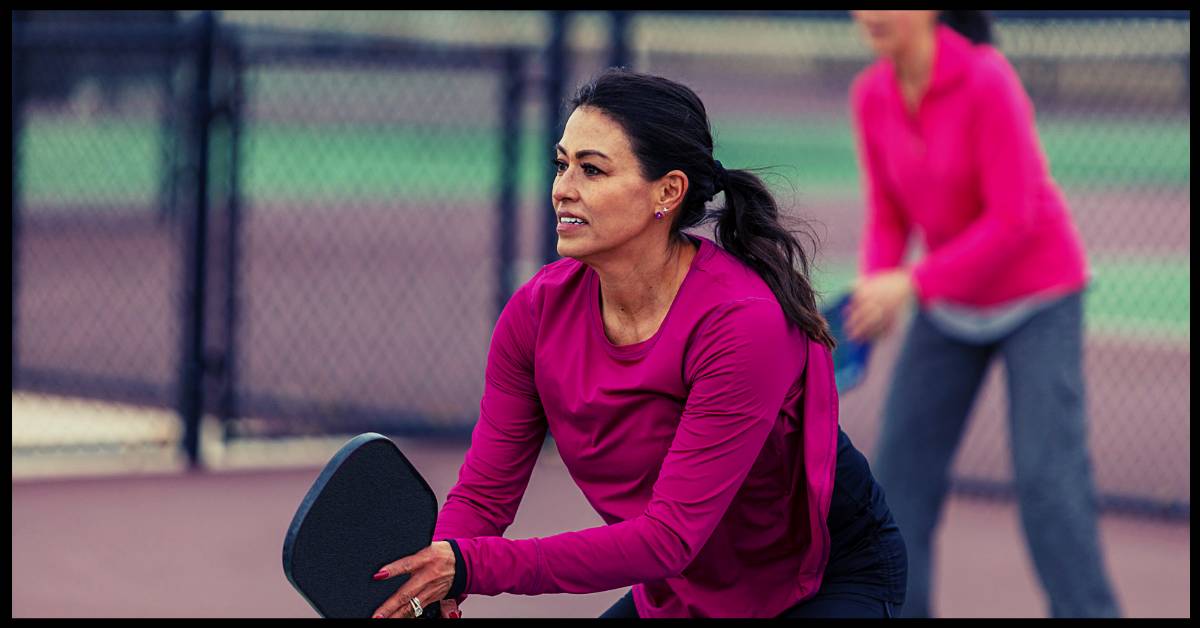
Best pickleball tips and tricks are what separate intermediate players from advanced court tacticians. If you find yourself constantly asking how to improve your pickleball game, the answer lies in mastering both physical mechanics and strategic nuances. In this comprehensive, competitive guide, we will break down elite pickleball strategy, from mastering Non-Volley Zone play to navigating the notoriously tricky transition zone. Implementing these proven techniques will rapidly reduce unforced errors, dramatically increase your court awareness, and give you the competitive edge you need to dominate tournaments and rec play alike. Whether you are searching for pickleball for beginners or advanced competitive strategies, this guide covers it all.
The fastest way to elevate your game is by mastering the Third-shot drop to neutralize aggressive serving teams and advancing safely to the Kitchen. Combine this with the Split-step for elite pickleball court positioning and implement strict communication protocols in doubles to avoid center-court collisions. Focus on patience, soft pickleball dinking strategy, and targeted shot placement to dramatically reduce Unforced errors.
Dominating the Non-Volley Zone
The Non-Volley Zone, universally known as the Kitchen, is where the vast majority of high-level matches are won or lost. Elite Non-Volley Zone play requires extreme discipline and constant readiness. When positioned at the Kitchen line, always maintain a wide, athletic base in the Ready position with your paddle at chest height to react instantly to sudden speed-ups. The Two-Bounce Rule explicitly forces the serving team to let the return bounce, which gives you precious time to establish this dominant, forward net position without hesitation. Perfecting your Paddle grip is essential here, allowing for seamless transitions between forehand and backhand blocks.
One severely overlooked aspect of Kitchen dominance is paddle weight customization and precise paddle angles. Adjusting your paddle’s swing weight with strategically placed lead tape directly impacts your kitchen reaction times and hand speed. More importantly, understanding the exact paddle angles for soft resets under pressure is critical. When absorbing a hard drive, you must soften your grip pressure significantly and open the paddle face to precisely a 45-degree angle. This absorbs the kinetic energy of the incoming ball and deadens the rebound, ensuring your reset lands harmlessly as a soft dink shot in the Kitchen rather than popping up for an easy smash.

The Art of the Third-Shot Drop

If you are continuously studying how to improving your pickleball game, mastering the Third-shot drop is absolutely mandatory. This delicate, high-arcing shot purposely forces the net players to hit upward from below the net cord, completely neutralizing their immense positional advantage. A flawless Third-shot drop buys you the vital milliseconds needed to safely sprint forward from the baseline and cement your place at the Kitchen line. For those focusing on pickleball for beginners, the Third-shot drop is the most important milestone to transition into intermediate play.
Many intermediate players struggle immensely with hitting the ball directly into their opponents’ strike zone. This is frequently due to the psychology of target fixation: looking directly at the opposing player instead of the open gaps on the court subconsciously causes your brain to direct your hands to hit right into their paddle. By actively shifting your visual focus to the dead spaces and empty real estate on the court, your muscle memory will naturally guide the ball into safe, unattackable zones.
Navigating the Transition Zone and Split-Step Biomechanics
Navigating “No Man’s Land,” officially known as the Transition Zone, is a pure nightmare for many casual players. The standard, simplistic advice of “just run to the net” is fundamentally flawed and will get you punished by skilled opponents. Elite pickleball strategy dictates utilizing specific micro-transitions. When caught in the transition zone, utilize soft reset shots to drop the ball smoothly into the Kitchen, taking one or two controlled, deliberate steps forward after each shot rather than engaging in a reckless, uncontrolled sprint.
Crucial to this highly technical movement is the mastery of the Split-step, and understanding the specific biomechanics of the split-step to prevent injury is paramount. Right before your opponent makes contact with the ball, perform a tiny, synchronized hop to perfectly balance your body weight. You must land squarely on the balls of both feet simultaneously, with knees flexed at a 30-degree angle to act as shock absorbers. Landing flat-footed or on your heels sends jarring impact forces through your Achilles tendons and knees, leading to severe chronic injuries over time. This dynamic, proper posture allows you to explode instantaneously in any direction to dig out notoriously low balls or defend against unexpected, blistering drives. Additionally, when reacting to these high-speed shots, investing in the best eye protection for pickleball is highly recommended to stay safe on the court.
Adapting Strategies for Singles vs. Doubles
A critical factor often ignored by recreational players is adapting strategies for singles vs. doubles. Pickleball court positioning fundamentally changes depending on the format. In doubles play, the primary goal is reaching the net as a synchronized unit and utilizing a patient pickleball dinking game to force an error. The court is heavily crowded, placing a premium on soft touches, intelligent angles, and relentless consistency to outlast your opponents.
Conversely, singles pickleball strategy is an intense, high-stakes game of cat and mouse dominated by deep passing shots, explosive athleticism, and aggressive serving. In singles, the Third-shot drop is frequently replaced by a powerful, deep Third-shot drive aimed precisely at the corners, followed by a rapid charge to the net. Because you have to cover the entire 20-foot width of the court alone, hitting deep returns that pin your opponent to the baseline is the most effective way to buy yourself time to establish a dominant net position. Recognizing and implementing these distinct tactical differences will drastically improve your overall win rate across both formats.

Elite Dinking Strategy and Doubles Communication

A highly evolved pickleball dinking strategy is what ultimately breaks down professional, impenetrable defenses. Dinking is an intricate dance of extreme patience and calculated geometry. Instead of eagerly attempting high-risk speed-ups at the first sign of a mediocre shot, focus entirely on moving your opponents side-to-side. By surgically targeting their outside foot with sharp cross-court dinks, you intentionally force them off-balance, slowly creating massive, exploitable gaps directly in the middle of the court for an aggressive Dink shot finish.
This leads directly to the sheer importance of flawless doubles communication. Proper spacing and teamwork are critical. You must establish strict communication protocols with your partner—using pre-point hand signals or specific, loud verbal cues like “Mine!”, “Yours!”, or “Switch!” to avoid catastrophic, point-ending center-court collisions. When both players move seamlessly as a unified wall, synchronized laterally like a pendulum on a string, defending against sudden surprise attacks becomes virtually effortless, significantly lowering your Unforced errors count.
Tournament Mental Preparation and Serve Depth
USA Pickleball regulations strictly mandate an underhand serve, but that certainly does not mean your serve should be a weak, easy lob. Maximizing your serve and return depth is a foundational, non-negotiable tactic for controlling the pace of the game. A deep, heavy serve forcefully pushes the returning team to the absolute baseline, forcing a much longer, infinitely more difficult return trajectory. Similarly, your return of serve must be struck deep and lofty, granting you the ample hang-time required to safely jog up to the Kitchen line before the third shot is even struck. While mastering obscure rules—like knowing what happens if the ball bounces back over the net—can win you occasional free points, maintaining consistent serve depth remains the most reliable way to secure victories.
Once you have these fundamental basics permanently dialed in, you can begin seamlessly incorporating advanced, highlight-reel maneuvers like Erne and ATP shots. However, executing these shots flawlessly under pressure requires immense tournament mental preparation which sets advanced players apart. The ability to compartmentalize mistakes, maintain a slow, steady breathing rhythm between points, and visualize your successful strategies before stepping onto the court prevents adrenaline spikes from ruining your muscle memory. Both elite physical maneuvers and mental resilience require exceptional timing, elite spatial awareness, and hours of dedicated practice, but they are devastatingly effective when executed perfectly in tournament scenarios.
Frequently Asked Questions
What is the most important shot in pickleball?
The most critical and heavily practiced shot is the Third-shot drop. It fundamentally neutralizes the returning team’s massive early advantage at the net, slowing the pace of play and safely allowing the serving team to physically transition forward to the Kitchen line without being instantly attacked.
How can I stop making so many unforced errors?
Focus heavily on unwavering patience, precise shot selection, and mastering the micro-transitions in the Transition Zone. Always wait for high balls to launch an attack, consistently utilize soft dinks to construct the point defensively, and actively shift your visual focus to the open gaps on the court to avoid the psychology of target fixation.
What is the Kitchen in pickleball?
The Kitchen, officially documented in the rulebook as the Non-Volley Zone (NVZ), is the highly restricted 7-foot area on both sides of the net where players are strictly forbidden to volley (hit the ball directly out of the air) without letting it physically bounce on the ground first.
How much should you tip a pickleball lesson instructor?
When you take a professional pickleball lesson, tipping your instructor should always be done after you’ve had a highly positive, transformative experience. A universally accepted rule of thumb is about 15-20% of the base cost of the lesson. Rewarding them appropriately ensures they continue providing top-notch, highly focused teaching in the future.
How to become a 3.5 pickleball player?
Becoming a certified 3.5 pickleball player requires mastering the Third-shot drop, perfecting the timing of your Split-step, establishing strong, unambiguous communication protocols in doubles play, and dramatically reducing your baseline unforced errors. Consistency, patience, and intelligent placement will always beat flashy power at this intermediate milestone.