Improving your pickleball skills takes focused practice, and ball machines offer a unique way too sharpen your game on your schedule. Whether you’re a beginner aiming to master basic shots or a seasoned player refining precision and footwork, the right drills can transform repetitive practice into meaningful progress. In this guide, you’ll find 20 carefully selected ball machine exercises designed to build consistency, increase reaction speed, and simulate real-game situations-helping you get more from every session. We’ll help you navigate different skill levels and balance budget-amiable options with advanced features, so you can choose drills that fit your goals and equipment. Ready to elevate your play with practical, effective training? Let’s dive into game-changing drills that make solo practice both productive and engaging.
Choosing the Right Ball machine for Pickleball Drills
Picking the perfect ball machine can transform your pickleball practice from a routine session into a dynamic, skill-building experience. whether you’re new to the game or a seasoned player aiming to fine-tune your shots, choosing the right machine involves balancing your skill level, budget, and training goals. unlike other ball sports, pickleball’s unique court size and ball characteristics mean that not every ball launcher is up to the task; opting for a machine designed specifically for pickleball ensures realistic ball trajectories and consistent feeding, which are essential for drilling effectively.When shopping for a pickleball ball machine, consider how the device matches your intended use.For beginners,a straightforward,reliable machine with adjustable speed and oscillation helps develop fundamentals without overwhelming settings. Experienced players might look for programmable drills, variable spin options, and shot placement control-features that simulate game-like situations and challenge your reaction times. Portability and ease of setup also impact your practice consistency; a compact, lightweight machine that fits easily into your car encourages regular use, while bulkier models may offer longer battery life and advanced tech but at the cost of portability.Budget plays a pivotal role. Entry-level machines typically fall within a comfortable price range and provide all basic functionalities, making them excellent for learning and casual play. Premium models, while pricier, come packed with innovative features like app integration, customizable training modes, and enhanced durability-investments that serious players might find invaluable for honing competitive skills. To clarify these options, here’s a rapid comparison:
| Feature | Budget Machines | Premium Machines |
|---|---|---|
| Speed & Spin Control | basic speed adjustment; limited or no spin control | multi-level speed and spin settings for diverse drills |
| Drill Customization | Preset patterns with limited variability | Fully customizable programs and shot sequences |
| Portability | Lightweight and compact | Heavier, but some offer foldable or wheeled designs |
| Battery Life/Power | Standard battery life for short sessions | Extended battery or AC power options for lengthy practice |
| Connectivity | No or minimal connectivity features | App control and Bluetooth integration |
Ultimately, the best ball machine matches your practice style and goals. A mid-range machine with solid core features often strikes the ideal balance-supporting growth without breaking the bank. Remember, consistent use trumps bells and whistles. For example, a beginner refining their serves daily on a simple machine will see faster progress than chasing complex features they rarely use. Free practice time and player feedback can help guide final choices-try demos or rentals when possible to feel how a machine performs on the court before committing.
Choosing wisely not only saves money but shapes how efficiently you build skills, making your drill sessions more effective, engaging, and tailored to the fun, fast-paced spirit of pickleball.
Essential Features to Look for in Pickleball Ball Machines
Picking a ball machine tailored specifically for pickleball practice can dramatically elevate how you train, but not all machines deliver the features you’ll actually use on the court. The best ones combine versatility, ease of use, and realistic ball behaviour to simulate game conditions while matching your skill level and training goals. Whether you’re aiming to master essential strokes or sharpen competitive instincts, knowing what to prioritize helps you invest wisely and stay motivated.
One of the critical features to focus on is adjustable speed and oscillation. These allow you to control the pace and direction of feeds, mimicking the unpredictability of real opponents. Beginners benefit from slower ball speeds and wider oscillation to practice footwork and shot timing without feeling overwhelmed. Advanced players, though, will want machines with fine-tuned speed increments and customizable oscillation patterns to simulate specific shot sequences and challenge reaction times.
Equally important is the ability to generate varied spin and shot placement. Incorporating topspin, backspin, or slice creates realistic ball trajectories that force you to respond as in a match. Some premium models offer these spin controls along with programmable target zones across the court, so you can isolate weaknesses-like forehand returns or drop shots-with precision drills. As a notable example, targeting deep baseline shots followed immediately by short dinks trains transition skills that match actual gameplay scenarios.
Portability, Power Source, and user Interface
Portability frequently enough decides whether you’ll use the machine consistently. Lightweight, compact models with foldable or wheeled designs make getting to the court hassle-free. If you travel frequently or play at multiple venues, this becomes a top priority. Conversely, bulkier machines might offer longer battery life or AC power options ideal for marathon training sessions but sacrifice ease of transport.
The user interface matters as much as hardware specs. Intuitive controls, clear displays, or smartphone app integration streamline drill setup, especially when toggling between preset programs or customizing shot sequences. Beginners appreciate straightforward buttons, while tech-savvy players gain advantage from advanced programming capabilities that let them simulate opponents or create personalized workouts.
| Feature | Why it Matters | Ideal For |
|---|---|---|
| Speed & Oscillation Control | Enables varying ball pace and trajectory to replicate game conditions | Beginners to pros-gradual skill advancement |
| Spin & Shot Placement | Realistic ball behavior for targeted skill improvements | Intermediate to advanced players looking for tactical drills |
| Portability | Ease of transport and setup encourage regular practice | Casual players and traveling competitors |
| Power Options | Battery vs. AC power affects session length and mobility | long training sessions vs. on-the-go practice |
| User Interface | Simplifies program selection and adjustment during drills | All skill levels-important for efficiency and engagement |
In sum, gear decisions boil down to aligning features with your habits and ambitions rather than chasing every available high-tech option. For most players, focusing on machines that deliver consistent feeds with adjustable speed, oscillation, and spin strikes the best balance. these provide the versatility to grow from developing core mechanics to mastering complex shot patterns, supporting a fun, purposeful practice surroundings. Seek out demo opportunities to experience how a machine performs live. After all, the right ball machine doesn’t just feed balls; it fuels progress.
Setting Up Your Ball Machine for maximum Practice Efficiency
Setting up a pickleball ball machine properly can transform an ordinary practice session into a highly productive training experience. The goal is to minimize setup hassle and maximize practice quality so every hit counts toward sharpening your skills. Whether you’re a beginner trying to build stroke consistency or a competitive player working on tactical shots,thoughtful preparation before you start ensures the machine delivers realistic drills aligned with your goals.Begin by selecting the right court location and positioning the machine carefully. Ideally,place the machine where it can cover the widest range of feeds without frequent repositioning. For most machines, this means centering it behind the baseline or slightly off-center if you want to emphasize crosscourt or down-the-line shots. Taking time to measure or mark target zones on the court with cones or tape is invaluable; it lets you check if the feeds land exactly where intended and adjust the angle and height accordingly.
Calibrating Settings for Your Skill Level
Next comes configuring your machine’s core features: speed, oscillation, and spin. Beginners should start with slow ball speeds and wider oscillation to allow ample reaction time and work on footwork patterns. For example, setting oscillation to cover both sidelines encourages lateral movement and builds stamina, preventing habituation to a static target. Intermediate and advanced players benefit from narrower oscillation, faster speeds, and varied spin (topspin, backspin) that mimic real match conditions.Experiment with programs that combine shot placement and spin to replicate important scenarios, such as deep baseline drives followed by quick net dinks.
| Setting | Purpose | Recommended For |
|---|---|---|
| Slower speed, wide oscillation | Develop timing, footwork, and comfortable stroke mechanics | Beginners, warm-ups |
| Moderate speed, targeted oscillation | Focus on placement accuracy, shot variety | Intermediate players |
| Higher speed, spin variation, precise targeting | Simulate match pressure and complex shot sequences | Advanced players |
Optimizing Practice Flow and Ball Supply
Consistent rhythm fuels better practice habits.before hitting “start,” ensure your machine’s hopper is filled well, so you avoid frequent refills mid-session. Arrange balls nearby for quick reloads.some players find it useful to keep a practice log or timer to break drills into manageable segments with short rests. this maintains focus and allows physical recovery without wasting court time.
Remember also to position yourself thoughtfully. Stand in your typical ready stance and check if machine feeds force you to move naturally. If not, tweak oscillation or ball height to encourage real-game movements instead of static hitting.Pro tip: occasionally swapping the machine’s position, such as shifting slightly closer or to the opposite baseline corner, challenges your adaptability-key for success on unpredictable courts.
In sum, meticulous setup-covering machine placement, settings calibration, and practice management-has a dramatic impact on drill efficiency. Over time, these deliberate steps become second nature, turning the ball machine into a reliable training partner that pushes your pickleball skills forward consistently and enjoyably.
Top 5 Beginner Ball Machine Drills to Build Core Skills
Pickleball beginners often find that consistent, focused repetition is the fastest path to developing solid fundamentals. Utilizing a ball machine turns what might or else be a random rally into a structured training session that builds muscle memory,footwork,and shot confidence. By controlling ball speed, placement, and rhythm, you can isolate key skills and gain meaningful progress without a partner.Here are five practical drills tailored to help newcomers build core pickleball competencies efficiently and enjoyably.
- Baseline Rally Drill: Set your ball machine behind the baseline with a slow, steady feed aimed near the center of the court. Focus on controlled, consistent groundstrokes-forehand and backhand-practicing smooth swings and balanced footwork. This drill develops timing and stroke mechanics while reducing pressure from unpredictable ball placement.
- Side-to-Side Movement Drill: Use wide oscillation settings to alternate balls between the left and right upper corners of the court. The goal is to improve lateral footwork and prepare your body for quick directional changes. Beginners should maintain a ready stance and focus on small adjustment steps to get into position, helping to build endurance and court coverage skills simultaneously.
- Short Dink Practice: Lower the feed and speed settings to simulate soft dinks dropping just over the net. This drill enhances touch, control, and patience at the non-volley zone-an essential area for winning points. Repeating gentle shots encourages developing wrist control and feel, reducing the chance of popping balls too high or hitting them into the net.
- Serve Return fundamentals: Program the machine to serve slow balls toward different spots within the service box. Concentrate on position, grip, and smooth returns focusing on depth rather than power. Repetition here helps beginners build confidence against serves, reinforcing proper stance and swing path without rushing to attack.
- Consistency Challenge: try a timed drill aiming to sustain continuous rallies without a miss. You can manually track your longest streak or use a practice log. This encourages mental focus, stamina, and real-time adjustment to the ball machine’s pace, fostering resilience and competitive readiness.
balancing Skill development and Equipment Choices
Manny beginner ball machines offer useful preset programs covering these drills, with budget units providing basic oscillation and speed controls while premium models add spin variety and programmable shot sequences.Prioritize machines that allow intuitive adjustments-this ensures you can tailor feeds as your skills improve. Remember, the goal isn’t gadget complexity but repetitive quality and movement.
| Drill | Primary Skill Developed | Recommended Machine Feature |
|---|---|---|
| Baseline Rally | stroke mechanics, timing | Consistent speed, fixed feed position |
| Side-to-Side Movement | Lateral footwork, court coverage | Wide oscillation, variable feed angles |
| Short Dink Practice | Touch control, net play | Adjustable ball height, low speed |
| Serve return Fundamentals | Return positioning, accuracy | Targeted feeds within service box |
| Consistency Challenge | Mental focus, endurance | Programmable feed rhythm, timer |
Each drill plays a vital role in establishing a strong foundation for all future pickleball endeavors. Regular use of these beginner-focused machine drills will boost confidence, reduce common errors, and develop the physical nuances essential for smoother transitions to intermediate techniques. Trust the process-with steady repetition and purposeful practice,your pickleball game will gain momentum rapidly and sustainably.
Advanced Ball Machine Drills to Sharpen Your Game
One of the most effective ways to elevate your pickleball game beyond the basics is by incorporating advanced ball machine drills that replicate high-level match scenarios. These drills are designed not just to improve consistency but to sharpen your tactical awareness, shot variety, and adaptability under pressure. By fine-tuning your skills with precise feeds-varying speed, spin, and placement-you simulate the unpredictability of competitive play without relying on a partner’s availability.
- Multi-Angle Oscillation Drill: Use your machine’s programmable oscillation to deliver unpredictable ball trajectories hitting deep corners, short drop balls, and occasional lob feeds in rapid succession. This drill enhances decision-making speed and footwork,forcing you to constantly adjust your positioning and shot selection on the fly. It mimics the challenge of facing an opponent with varied shot patterns and keeps your reflexes razor-sharp.
- spin Variation challenge: Advanced machines offer spin controls that can simulate heavy topspin, slice, or side-spin shots.Practice reading ball rotation by setting up drills where the machine alternates between spins mid-rally. This strengthens your paddle control, stroke biomechanics, and timing-skills essential for handling tricky returns during fast-paced exchanges.
- Short & Deep Combo Drills: Program sequences that mix soft dinks at the kitchen line with sudden deep drives to the baseline. The goal here is to sharpen your transition skills-from delicate net play to aggressive baseline shots-while improving your anticipation and stroke adaptability. This drill is especially valuable for players aiming to dominate both fast-paced net battles and long rallies.
Incorporating Pressure Scenarios and Match-Like Intensity
Advanced drills also benefit from adding competitive pressure elements. Such as, set your ball machine for timed feeds to increase rally pace, then challenge yourself to maintain a predetermined number of consecutive successful returns without error. This hones mental toughness and resilience under fatigue-key attributes for tournament play.
| Drill | Focus Area | Recommended Machine Feature |
|---|---|---|
| Multi-Angle Oscillation | Footwork adaptability, shot selection | Programmable oscillation, varied feed locations |
| Spin Variation challenge | Reading spins, stroke adjustment | Spin control (topsin, slice, sidespin) |
| Short & Deep Combo | Transition control, anticipation | Adjustable ball height and speed, sequence programming |
| High-Intensity Consistency | Mental stamina, error management | Programmable feed rhythm, timer functions |
While high-end ball machines provide richer programming options for these complex drills, budget-friendly units can still effectively enhance your skills by manual adjustments of speed, oscillation, and feed intervals. The key is purposeful practice combined with a gradual increase in difficulty. Remember, advanced drills are not about overwhelming your system but about building precise control, effective court positioning, and versatile shot execution under pressure.
Integrate these drills into your training regime 2-3 times per week alongside match play to ensure skills translate seamlessly from practice to competition. With consistency and focus, the ball machine becomes a silent coach, pushing you toward mastery and confidence in all facets of your pickleball game.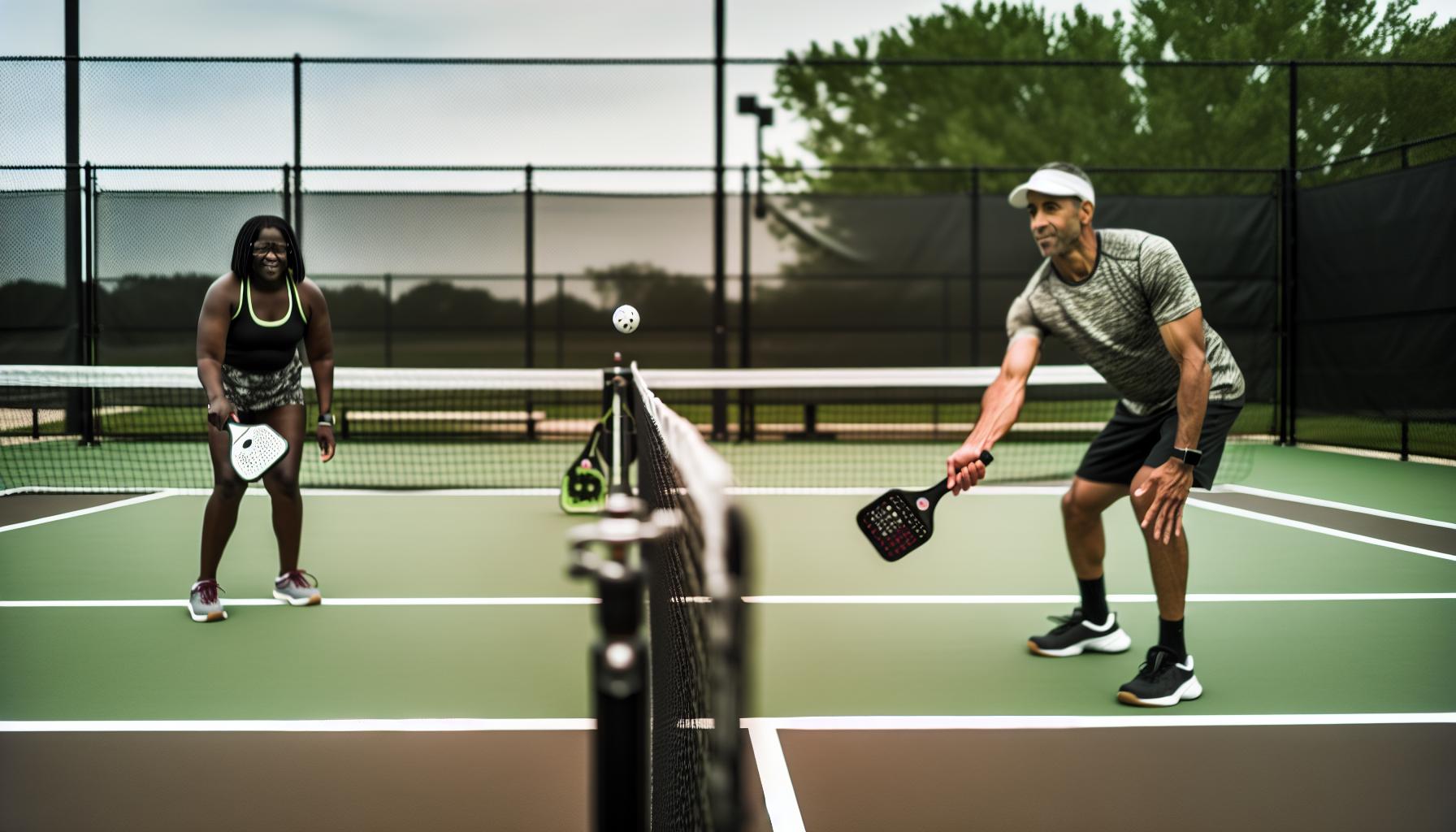
Drills to Improve Pickleball serve and Return Accuracy
Improving your serve and return accuracy is a cornerstone of competitive pickleball, and using a ball machine can transform this vital part of your game with consistent, targeted practice. Unlike drills with a human partner, ball machines can deliver precise, repeatable feeds right into your preferred hitting zones-allowing you to focus on refining your mechanics, timing, and placement without interruption. Whether you’re just starting out or looking to sharpen tournament-ready skills, tailored machine drills make progress measurable and efficient.
For serves, the goal is to develop both consistency and strategic variation. Set your ball machine to simulate serves with different speeds, trajectories, and landing spots within the service box.Practicing against a machine that can vary feed height and angle emulates real match scenarios where opponents serve deep, short, or with subtle spin. This trains your muscle memory for controlled tosses and paddle swings while helping you master the legal serve rules, such as underhand technique and hitting below the waist. Remember, budget machines without programmable oscillation still allow you to manually adjust feed positions to target your weaker serve zones.
When working on your return, consider programming drills that mimic common serve styles-fast serves down the line, spin serves to the body, or soft “spinny” serves just clearing the net. A good practice routine repeatedly challenges you to move quickly into position and deliver accurate returns, focusing on shot placement more than power. for example, returning deep crosscourt shots forces you to step into the ball and develop footwork agility, whereas returning shorter serves teaches patience and soft touch. Using ball machines with adjustable speed and oscillation settings helps you gradually increase difficulty as your confidence grows.
- Serve Placement Drill: Position the machine to feed balls alternating between wide and T serves. Aim targets on the court to build precision and practice legal power control.
- Return Depth Challenge: Machine feeds deep and short serves randomly within the service box while you practice placing returns into designated zones.
- Spin Serve Recognition: Use machines with spin options to identify underlying ball rotation, adjusting your paddle angle and swing accordingly for effective returns.
| Drill Focus | Recommended Machine Feature | Skill Level |
|---|---|---|
| Vary Serve Speeds and Placements | Programmable oscillation, variable ball speed | Beginner to advanced |
| Spin Recognition for returns | Spin control (topspin/sidespin) | Intermediate to advanced |
| Targeted Return Placement | Fine feed location adjustment | All levels |
Using a ball machine for serve and return drills also develops the mental sharpness required for match play. Practice drills under timed constraints or set goals for a consecutive number of successful serves or returns to simulate pressure. As your muscle memory and court awareness improve, your confidence and execution during stressful points will strengthen.
Ultimately, integrating ball machine drills focused on serve and return accuracy provides unmatched repetition and control. Skill-building becomes less about quantity and more about purposeful, quality practice-yielding a serve that sets you up for success and returns that destabilize your opponent’s rhythm. Advance through settings and drills progressively to ensure steady development without overwhelming yourself, keeping pickleball practice enjoyable and highly effective.
using Ball Machines for Quick Reaction and Agility Training
Great reaction times and agile footwork are frequently enough the difference between a good player and a great one. Ball machines offer a unique and highly effective way to sharpen these skills by simulating unpredictable game-like scenarios that challenge your reflexes and movement. by running drills that require lightning-fast adjustments and rapid direction changes, you train your body to respond instinctively, improving both your reaction speed and on-court agility.
When selecting a ball machine for reaction and agility training, look for features like variable feed intervals, customizable oscillation, and random shot placement. Mid-to-high-end machines typically allow you to program feeds that bounce fast from side to side or come at irregular intervals, mimicking the barrage of shots you’d face in a heated rally. This unpredictability forces you to anticipate, read the ball early, and move explosively-key components of elite pickleball defense.
- Quick Shuffle drill: Set the machine to alternate feeds sharply between left and right courts with minimal delay. Focus on short, explosive lateral steps and use a split-step to prepare for ball contact.
- Rapid fire Drill: Program feeds at faster speeds with variable heights to boost hand-eye coordination while you practice quick pivots and recovery movements.
- Random Placement Challenge: Enable oscillation both horizontally and vertically, so balls land unpredictably within the kitchen and baseline areas, compelling you to adjust positioning rapidly.
Balancing Budget and Performance
For players on a budget,some entry-level machines may lack fine control over timing and oscillation but can still help build fundamental quickness by manual feed adjustments and basic side-to-side settings. Premium models often feature programmable drills with app connectivity, allowing you to tailor sequences precisely and increase difficulty progressively. Regardless of cost, prioritizing consistent ball trajectories during drills ensures that you can concentrate on your movements rather than compensating for erratic feeds-a critical factor when training reaction times.
| Feature | Basic Machines | Premium Machines |
|---|---|---|
| Oscillation Control | Manual side-to-side | Programmable multidirectional |
| Feed Interval | Fixed or limited variability | Adjustable with random timing |
| Spin Options | Limited or none | Topspin, backspin, sidespin |
| App Connectivity | Rare | Common for advanced drill customization |
Integrating ball machine drills with quick reaction components into your regular practice routine can translate directly to better defense and court coverage in matches. such as, by repeatedly practicing fast lateral movements to handle rapid feeds, you increase muscle memory and reduce the delay from visual cue to first step. Pair these reaction drills with off-court agility exercises-like ladder drills or cone shuffles-to maximize your footwork efficiency and prevent fatigue during long rallies.
In real gameplay, being able to react quickly to unexpected shots can turn a defensive situation into an offensive chance.Using a ball machine’s capacity to deliver unpredictable, varied shots enables you to simulate that pressure environment repeatedly-without needing a partner to keep you constantly challenged. Over time, this method builds your physical responsiveness, conditioning, and confidence, all crucial for elevating your pickleball performance.
Combining Ball Machine Drills with On-court Strategy Practice
Few training tools unlock greater potential than combining ball machine drills with strategic on-court practice. While ball machines excel at enhancing your shot consistency and reaction speed, integrating these drills with real-game tactics bridges the gap between raw skills and match-winning decisions. This fusion cultivates not just physical readiness but also sharpens your tactical mindset, making every stroke count under pressure.To make the most of this approach, start by designing drills that simulate common game scenarios. Such as, set your machine to deliver a series of shots targeting your opponent’s weaker side-such as deep backhand returns or angled soft volleys. As you execute the strokes,consciously practice moving into optimal court positions anticipating your next shot or your opponent’s likely response. This back-and-forth between shot execution and strategic footwork trains you to think one step ahead rather than reacting passively.
- Scenario-Based Drills: Program feeds reflecting typical match patterns (like alternating dinks and drives). Pause between shots to visualize opponent reactions or decide your next shot, then test those choices immediately.
- Pressure Simulation: Increase ball speed and randomize placements to mimic the unpredictability of rallies.Combine this with focused drills on maintaining court position and managing shot selection under duress.
- Mixed Spin and Placement: Use machines that can add topspin, backspin, or sidespin to shots while varying target zones, helping you practice strategic shot responses such as dropping to the kitchen line or switching between offensive and defensive postures.
Balancing Skill Work and Tactical Growth
Many players focus solely on hitting mechanics during solo practice,but effective game preparation requires weaving tactical thinking into these repetitions. For instance, after mastering a consistent crosscourt volley with the machine, challenge yourself to control rally pace by mixing in soft dinks and deep baseline drives during the same drill session. This keeps your mind engaged and builds match-like adaptability.
Budget-friendly ball machines typically offer basic oscillation and speed settings, sufficient for these fundamental drills. However, players aiming for nuanced strategy practice should consider premium models with programmable sequences and spin options. These features allow you to recreate complex rally patterns, a crucial step to transferring solo training gains into competitive match play.Ultimately, merging ball machine drills with on-court strategy practice turns isolated skill-building into holistic advancement. It teaches you to execute shots not only technically sound but also strategically precise, enhancing your decision-making agility and confidence with each session. This well-rounded preparation is key to facing diverse opponents and elevating your pickleball game from good to great.
Customizing Drill Programs for Different Skill Levels
Pickleball ball machines can be powerful allies on your journey from novice to expert, but their true value unlocks when you tailor drill programs to fit your current skill level. Whether you’re just getting comfortable with basic shot placements or refining precision and tactical variety, customizing practice sessions ensures every ball fed by your machine challenges you appropriately without causing frustration or boredom.This personalization also helps maximize the return on your investment-budget models might cover foundational drills, while premium machines with programmability can simulate complex rally sequences suited for advanced players.
For beginners, focus on programming drills that emphasize consistency and correct form. Repetitive feeds to the forehand and backhand corners at moderate speed help ingrain proper swing mechanics and footwork habits. It’s helpful to keep drills straightforward-shoot for steady,predictable ball placement rather than complex oscillations or spins.Many entry-level machines deliver these essentials well. Gradually increase pace and introduce small variations in ball height or depth as confidence grows, always prioritizing quality contact over raw power.
Intermediate and Advanced Adjustments
As your skills evolve, challenge yourself with drills that incorporate randomness and strategic shot placement. Advanced machines with programmable shot patterns and spin controls provide unbeatable practice environments that mimic real-game conditions. For example, mixing deep drives with soft dinks, or alternating between angled crosscourt shots and straight baseline returns, trains you to anticipate and adapt on the fly. Incorporate target zones that simulate opponent weaknesses and practice moving efficiently to get into position.This approach sharpens both technical skill and tactical awareness.
- Spin Variations: Use topspin, backspin, or sidespin to replicate different shot effects.
- Randomized Feeds: Introduce unpredictability to develop reaction speed and decision-making.
- Programmed Sequences: create and reuse drills that replicate your most common match scenarios.
Budget considerations frequently enough rear their head at this stage. While premium models excel in customization, creative use of simpler machines combined with manual adjustments (like repositioning the machine or varying ball speed) still can provide valuable intermediate and even advanced training. Supplement these sessions with on-court partner drills or match play to test your evolving abilities under pressure.
| Skill Level | Recommended Drill Focus | Machine Features Needed | example Drill |
|---|---|---|---|
| Beginner | Basic shot consistency, form, and footwork | Constant speed, fixed placement | Repetitive feeds to forehand/backhand corners |
| Intermediate | Variation in placement and pace, introduction of spin | Adjustable speed, oscillation, basic spin options | alternating deep/small shots with moderate speed |
| Advanced | Strategic patterns, mixed spins, randomized feeds | Programmable sequences, multi-spin control, speed variance | Simulated match rallies targeting specific weaknesses |
Ultimately, customize your drill programs by aligning machine capabilities with your current goals-whether that’s building confidence through repetition or simulating unpredictable match-like rallies. Regularly reassess your progress and update drill complexity to keep improving without plateauing. This dynamic approach helps you make the most of any ball machine and keeps pickleball practice both engaging and productive at every stage.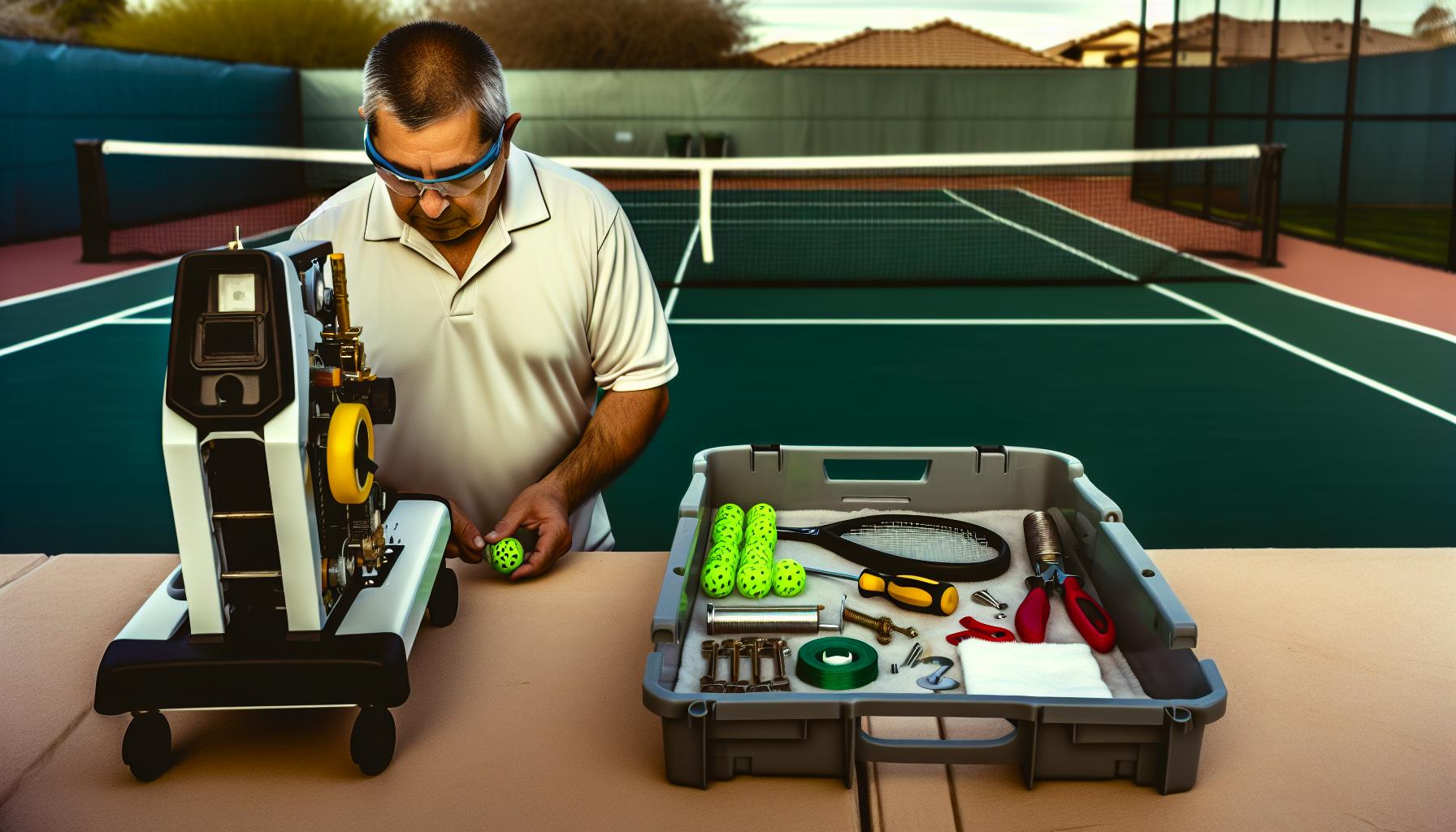
Maintaining and troubleshooting Your Pickleball Ball Machine
Few things derail a productive pickleball practice faster than unexpected machine downtime. Whether you’re using a budget-friendly model or a high-end programmable ball feeder, regular upkeep can be the difference between smooth sessions and frustrating interruptions. Understanding common maintenance tasks and troubleshooting principles empowers you to keep your machine firing consistently,so you focus more on skill-building and less on repairs.
Routine Care to Maximize machine Longevity
Start with simple daily or weekly rituals: clean the exterior,clear away dust and debris from feeding wheels,and inspect power cords and batteries. Pickleball courts can accumulate dirt and grit that sneak into the feed mechanism, causing jams or uneven delivery. If your machine uses rechargeable batteries, charge them fully and avoid leaving the unit idle for long stretches without power. Many ball machines also benefit from lubricating moving parts every few weeks-check your user manual for recommended lubricants and intervals. Consistent care not only extends hardware life but also maintains the quality and predictability of ball feeds,which is crucial for replicable drills.
Common Issues and Practical Fixes
Here are typical glitches and how to address them without needing a costly repair service:
- Ball Jams: Most often caused by damaged or misaligned feed wheels or debris buildup. Turn off the machine, clear jammed balls manually, and wipe wheels with a damp cloth. Adjust wheel tension or alignment if feeds seem inconsistent.
- Inconsistent Ball Speed or Trajectory: Check for uneven wear on launch wheels and replace if necessary. Also, ensure balls used match machine specifications-cheap or overly worn pickleballs can throw off speed and spin.
- Power Failures: For corded units, test outlets and cables first. With battery-powered models, monitor battery life carefully and replace old batteries to avoid sudden shutdowns mid-drill.
- Control Panel Issues: Resetting your machine or updating firmware (for programmable units) often resolves erratic behavior. Refer to your manual for hard-reset procedures.
Balancing Budget Models and Premium Machines
Lower-cost ball machines typically require more hands-on maintenance due to simpler design and fewer fail-safes but arriving at a fair schedule for cleaning and inspection can keep them reliable for years. Premium machines, while more robust and feature-rich, have more complex electronics and moving parts-routine software updates and specialized service checks can prevent issues before they affect practice. Always weigh ongoing maintenance ease alongside initial features when choosing your trainer.
| Maintenance Aspect | Budget Machines | Premium Machines |
|---|---|---|
| Cleaning Frequency | Weekly or after each active session | Biweekly or monthly, depends on usage |
| parts Replacement | Simple parts inexpensive and often user-serviceable | specialized parts, may require professional servicing |
| Software Updates | Generally none or manual resets only | Regular firmware updates via app or USB |
| Troubleshooting Complexity | Basic mechanical fixes mostly | Combination of mechanical and electronic diagnostics |
Ultimately, treat your machine as a core training partner. Keeping it well-maintained reduces unexpected setbacks so your practice sessions remain consistent and effective. When problems arise, step through simple inspection and troubleshooting first-most issues have straightforward fixes. If the problem persists, reach out to the manufacturer’s support or experienced pickleball communities online for advice. Your ball machine is a powerful tool, and with a little TLC, it will help sharpen your game for many matches to come.
Q&A
Q: How can I use ball machine drills to improve my pickleball court positioning?
A: To improve court positioning, use ball machines to simulate shots from various angles and distances. Practice moving quickly to each ball’s landing spot, focusing on footwork and recovery stance. Combining these drills with strategy-focused routines enhances spatial awareness and anticipates opponent shots. Check the Combining Ball Machine Drills with On-Court Strategy Practice section for detailed tips.
Q: What are effective drills to develop consistency using a pickleball ball machine?
A: Effective consistency drills involve repetitive hitting at controlled speeds and placements from your ball machine. Start with slow, predictable feeds to master stroke mechanics, then gradually increase speed and variability. This builds muscle memory and control. For more, see Top 5 Beginner Ball Machine drills to build Core Skills in the main article.
Q: Why should I incorporate multi-directional ball machine drills in my pickleball training?
A: Multi-directional drills improve agility, reflexes, and court coverage by forcing you to respond to balls arriving from different sides and heights.This simulates real match conditions, sharpening your reaction time and footwork. These drills are essential for all skill levels and complement the agility training discussed in the article’s Using Ball Machines for Quick Reaction and Agility Training section.
Q: How frequently enough should I adjust ball machine settings to avoid plateauing in skills?
A: Adjust ball machine speed, spin, and placement every week to introduce new challenges and prevent skill plateaus. Incremental changes keep practice engaging and simulate varied match scenarios.Regularly customizing drills, as explained in Customizing Drill Programs for Different Skill Levels, maintains steady improvement in your pickleball game.
Q: What safety tips should I follow when practicing with a pickleball ball machine?
A: Always wear proper footwear and eyewear to protect against fast-moving balls. Position yourself safely behind or beside the ball machine during operation, and avoid distractions. Keep children and pets away. Following equipment maintenance guides in Maintaining and Troubleshooting Your Pickleball ball Machine ensures safe and reliable practice sessions.
Q: Can ball machine drills help develop advanced pickleball shots like dinks and lobs?
A: Yes, ball machines can be programmed to deliver precise, slow feeds perfect for practicing delicate shots like dinks and lobs. Focus on controlling paddle angle and shot placement to master these skills. review Advanced ball Machine Drills to Sharpen Your Game for drill ideas tailored to these techniques.
Q: When is the best time in my training routine to use ball machine drills for maximum benefit?
A: The best time is during focused practice sessions when you can dedicate 30-60 minutes to specific skill improvement without distractions.Starting with warm-up drills and progressing to fast-paced feeds maximizes muscle memory and reaction time. Pair drills with on-court play for full game development, as suggested in Setting Up Your Ball Machine for Maximum Practice Efficiency.
Q: How can I integrate ball machine drills with partner practice to boost my pickleball skills?
A: Use ball machines to warm up or focus on weak strokes individually,then transition to partner drills for real-time feedback and volley practice.This blend builds technical skills and match instincts. The article’s section on combining Ball Machine Drills with On-Court Strategy Practice offers strategies for effective integration.
Explore these targeted drills and tips to elevate your pickleball performance consistently. Feel free to revisit the main article for complete guidance on equipment, drills, and game strategy!
Wrapping Up
Mastering ball machine drills is your fastest path to elevating pickleball skills-whether you’re just starting out or competing seriously. These 20 game-changing exercises prove that focused practice with the right equipment can sharpen technique, improve consistency, and boost confidence on the court. Don’t wait to make the most of your training time; dive into these drills today to see real performance gains.
Ready to sharpen your fundamentals further? Explore our detailed guides on pickleball paddle selection and advanced shot strategies to complement your ball machine workouts. If you’re considering upgrading your practice gear, check out our latest ball machine reviews and comparison charts tailored for every budget and skill level. Questions or success stories? Join the conversation in the comments below, or subscribe to our newsletter for ongoing expert tips and exclusive gear deals.
Unlock your full potential by integrating these proven ball machine drills into your training routine-your next breakthrough in pickleball awaits. Keep practicing, stay motivated, and discover more ways to dominate the court with our in-depth resources.
Get our latest guides, news, and insights highlighted in your Google Search & AI Overviews.