Have you ever wanted to pick up a new sport but didn’t know where to start? Well, look no further! Pickleball is an incredibly fun and dynamic game that combines elements of tennis, badminton, and ping pong. It’s perfect for those who want to get moving and have a good time with friends. All you need are paddles, a pickleball, and a court – the rest is easy! Read on to learn the basics of Pickleball so you can join in the fun.
1. Step 1 – Learn The Layout of the Court

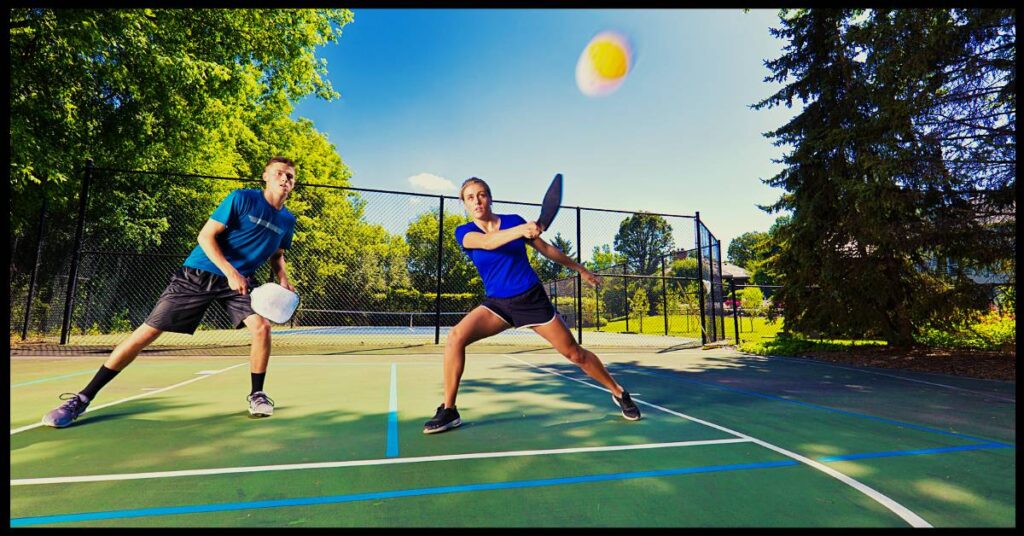
The court for Pickleball is a rectangular 44’ by 20’ area divided into two sides by a low net. Each side of the court features a sideline, baseline, and centerline (blue lines), as well as two non-volley lines (white lines) known amongst players as the “Kitchen�. The center line divides each side into left and right service courts, allowing pickleball competitors to serve from a pre-defined location and stand when their service is taken. This uniformity provides every player with the opportunity to thrive in the fair competition!
2. Step 2 – Get Your Equipment Ready
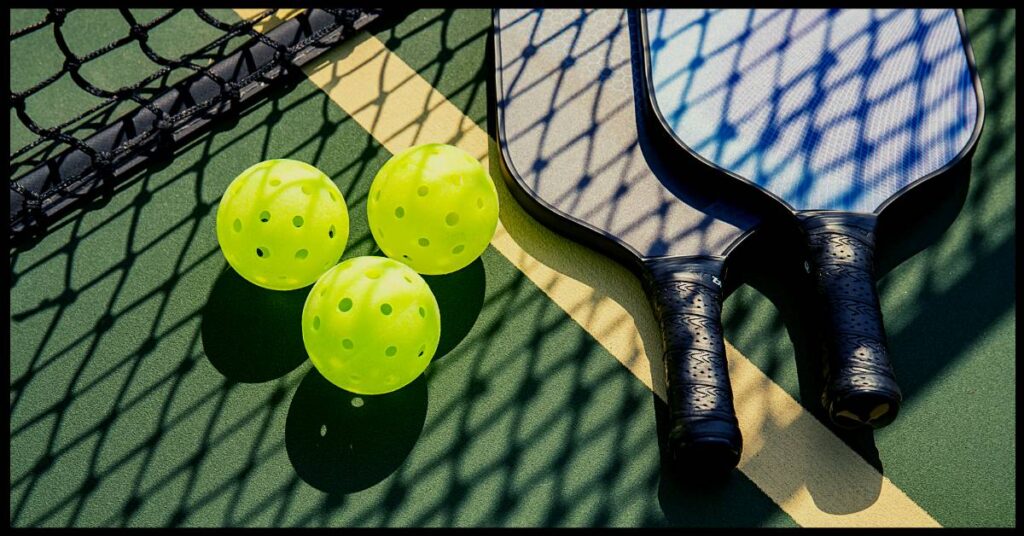
Pick up quality paddles that fit your playing style. The most popular material used for paddles is wood or aluminum alloy because they provide just enough power without sacrificing control or speed. Choose a pickleball with holes punched out of it, as it will provide more spin and control. If you are playing doubles, use two separate balls instead of one, as it provides more accuracy for both players.
3. Step 3 – Serve It Up
For singles, serve diagonally from behind the baseline on your right side to the opposite service box on your opponent’s left side. For doubles, each player serves one after another, starting at their right side (see diagram). When serving, always hit below waist height and make sure that it passes over the net within reach of your opponent’s paddle while staying within bounds (inside court lines). You can only serve from behind your own baseline when serving or returning shots; if you step into the non-volley zone before hitting or touching the ball, then it is considered a fault, and your opponent will receive a point.
4. Step 4 – Play The Point

After service has been established, players alternate hitting ground strokes back and forth across the net until one player fails to return their opponent’s shot back over the net (fault) or hits it out of bounds (fault). As long as both players return their shots correctly, then they will continue alternating groundstrokes until one misses their shot or commits a fault. Once there is a fault, then that team loses the point, and they must rotate positions while switching sides between points (doubles only). Play continues until one team reaches 11 points with a margin of 2 points leads over their opponents (e.g 11-9).
What is an ace?
An ace is a legal service that is not returned by the opposition (e.g they don’t even get their paddle on it). This earns the serving player an automatic point regardless of how many points they have managed to accumulate up till that point. Aces are rare in Pickleball as players must make deliberate contact with their serves, so accuracy and power are necessary to earn these points.
Points are given when a player scores an uncontested shot, with Joe Rogan famously saying that pickleball is like “ping pong on steroids.” At deuce—when both players have 10 points—the server retains the advantage and must score two consecutive points to win the match. Pickleball scoring may be easy to learn but difficult to master – happy rallying!
Enjoy Pickleball! With these basics under your belt, you can now join in the fun of this fast-paced game!
15 Mistakes All New Players Make!
When you are starting out in any game, mistakes are inevitable. You will make plenty of blunders and wrong decisions while learning the ropes and developing your skills.
Here is a list of 15 common mistakes new players make:
- Not reading or understanding the game’s rules – Every game has its own set of rules, so it is important to familiarize yourself with them before starting to play.
- Not having a proper strategy in place – Without a clear plan on how you should move forward and what resources you need, it can be hard to win any game, even if you have good skills.
- Not paying attention to detail – In some games, all the details matter; missing out on even one small thing can mean the difference between winning and losing.
- Not adapting to the changing situation – When playing a game, you must be able to adapt on the fly to any changes that might occur in order to stay ahead of your opponents.
- Not taking advantage of resources available – Sometimes, players don’t take advantage of all the tools and resources provided to them by the game, thus limiting their ability to succeed.
- Over-focusing on one aspect at the expense of others – You should strive for a balance between different aspects, such as strategic thinking, tactics, and resource management when playing games.
- Making careless mistakes – New players often make simple mistakes like choosing an incorrect option or misreading a situation which can be costly.
- Not communicating with team members – Communication is essential in any game, so it’s important to make sure everyone is on the same page and knows what their role is.
- Ignoring strategy guides – There are many strategy guides available online that can provide valuable insight into how to play a certain game successfully.
- Not learning from your mistakes – Making mistakes is just part of the learning process; however, you should take the time to reflect on what went wrong and try to improve for next time.
- Not experimenting with different strategies – To become a better player, it’s important to step outside your comfort zone by trying new ideas and methods that you haven’t used before.
- Playing defensively – In some games, playing too defensively can be just as bad as not having any strategy at all; you need to find a balance between offense and defense.
- Not studying the opposition – It’s important to take the time to study your opponents and their strategies in order to gain an edge over them.
- Becoming too complacent – Don’t become overconfident after achieving success, as this can lead to mistakes that cost you dearly in the long run.
- Taking shortcuts – While it might seem like a good idea at first, taking shortcuts while playing any game is rarely beneficial in the end and could result in costly consequences.
By avoiding these common mistakes, you can improve your game and increase your chances of becoming a successful player. If you are ready to step up your game, check out the best tips to improve your skills. Good luck!
A Quick Guide on How To Play Pickleball For Beginners
If you are wondering how to play pickleball for beginners, the most important thing to remember is to stay out of the kitchen and keep the ball in play. Pickleball for beginners focuses on learning the basic rules like the two-bounce rule and understanding the court layout. Once you master the fundamentals of pickleball how to play and practice your serve, the game becomes highly intuitive and incredibly fun.
Technical Guide: Advanced Insights on How To Play Pickleball For Beginners
Understanding the critical nuances of how to play pickleball for beginners can significantly elevate your consistency and tactical execution on the court. Whether you are dialing in your kitchen line dinks or developing aggressive third-shot drives, having properly matched equipment with premium materials—such as responsive polypropylene honeycomb cores and textured composite surfaces—provides the optimal blend of power, touch, and control.
| Evaluation Metric | Standard Option | High-Performance Choice | Player Benefit |
|---|---|---|---|
| Material Quality | Entry-Level Composite | Toray T700 Carbon / Thermoformed | Enhanced sweet spot and durability |
| Vibration Absorption | Basic Core Dampening | Specialized Edge Foam / Multi-Cell | Significantly reduced elbow strain |
| Shot Consistency | Moderate Sweet Spot | Expanded Perimeter Weighting | Forgiving off-center ball reset control |
| Tournament Compliance | Standard Recreational | Fully USAPA / USA Pickleball Approved | Sanctioned tournament ready |
Performance Comparison and Buyer Recommendations for How To Play Pickleball For Beginners
When selecting your gear for how to play pickleball for beginners, consider your individual play style, frequency of matches, and personal comfort priorities:
- Core Thickness & Weight: Match the static weight and swing weight to your physical preference for quick hand speed at the net.
- Grip Ergonomics: Utilize cushioned, sweat-absorbent replacement overgrips to ensure maximum racquet security during humid outdoor matches.
- Durability & Care: Store your equipment in temperature-controlled bags to prevent delamination and core degradation over time.
Frequently Asked Questions
What is the non-volley zone?
The non-volley zone (also referred to as the “kitchen�) is 7 feet from each side of the net and extends between both sidelines and baselines. Players are not allowed to make contact with any shots while standing in this area; if they do, then it is considered a fault. This rule was created to prevent players from spiking volleys or smacking returns which would put too much stress on the net and potentially damage it.
Can I use my feet when playing Pickleball?
No, this is against the rules, as you cannot intentionally touch any part of your body or clothing to the ball during play. You are allowed to use your feet for positioning and balance when playing shots, but you cannot kick or purposely hit the ball with any part of your body.
How do you play pickleball if you have no prior racket sports experience?
You can easily learn how to play pickleball even if you’ve never held a racket! The game is designed to be accessible. Start by learning the underhand serve, mastering the dink shot at the net, and understanding the two-bounce rule. Many local courts offer beginner clinics that break down how do you play pickleball step by step.
Essential Equipment: Paddles, Balls, and Training Aids
When selecting gear, many players debate the value of real vs clone pickleball paddles and ask themselves: are knock off pickleball paddles any good? While cheaper alternatives exist, investing in trusted brands often ensures better durability and control. For those dealing with joint pain, finding the best vibration shock absorbing pickleball paddle is crucial. Players often turn to reliable options like prince pickleball rackets or the Head extreme elite pickleball paddle for maximum comfort and performance.
If you’re training solo and looking to drill efficiently, you might be searching for the best pickleball machine on market. Another common training question is: does top spin pro for pickleball really help with the game? Yes, using spin-training aids can significantly improve your muscle memory for drops and drives. Regarding accessories, many ask: do polarized lenses affect depth perception in pickleball? While they effectively cut outdoor glar